
Structural reductionism
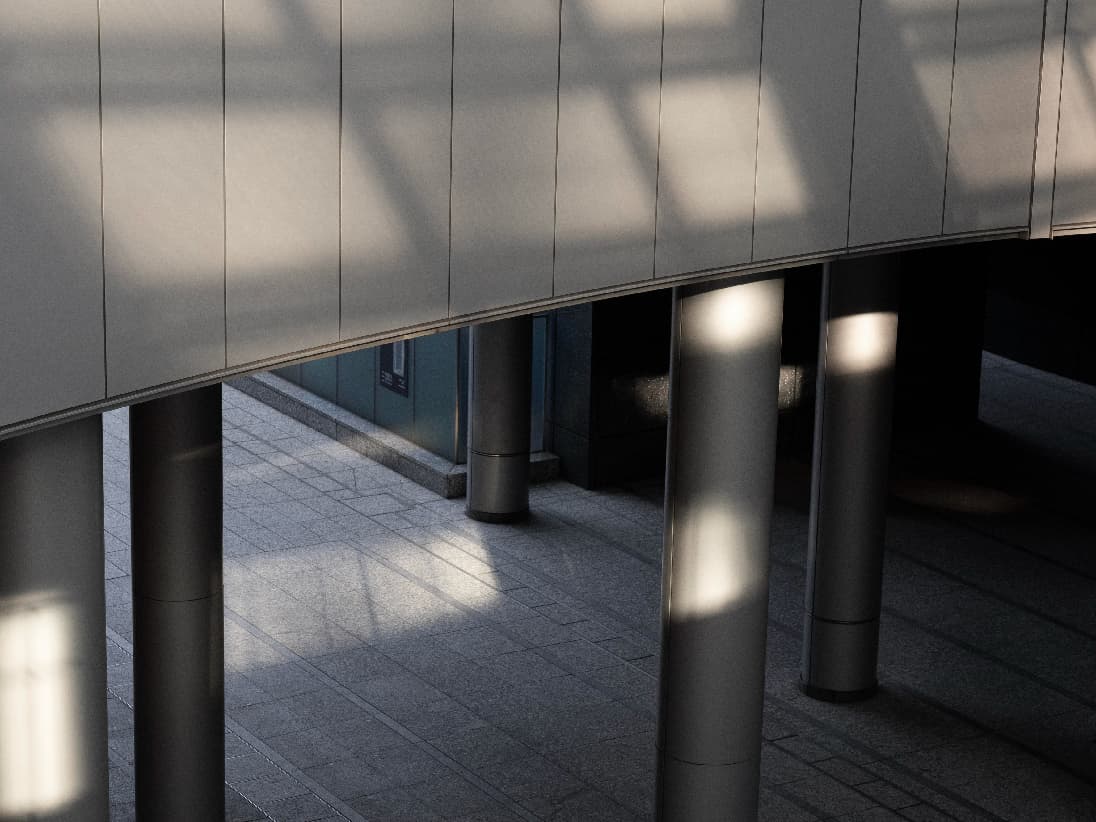
True minimalism is not about hiding elements; it is the absolute elimination of the unnecessary through physics.
AUTHOR
Edison Team
DATE
READ TIME
4 min read
Overview
Minimalism has been misunderstood as a purely aesthetic choice. In high-performance architecture, true minimalism is structural reductionism—engineering a building so precisely that every non-essential component is mathematically eliminated.
Form born from physics
We do not apply clean lines as a cosmetic afterthought. Clean lines are the direct result of resolving complex load-paths efficiently. When a structural framework achieves maximum efficiency, it naturally expresses an aesthetic purity that cannot be faked.
The luxury of space
In dense urban environments, the ultimate luxury is uncompromised space. By utilizing advanced post-tensioned slabs and high-yield steel cores, we remove the visual noise of internal columns, offering absolute spatial freedom.
Material honesty
Reductionism demands perfect material execution. When you strip away the decorative layers, the primary materials—concrete, steel, and glass—must be flawless. There is nowhere to hide poor craftsmanship in a reductionist structure.
Conclusion
Minimalism is easy to draw but exceptionally difficult to engineer. It requires uncompromising discipline to reduce a structure to its purest functional essence.
Structural reductionism
True minimalism is not about hiding elements; it is the absolute elimination of the unnecessary through physics.
AUTHOR
Edison Team
DATE
READ TIME
4 min read
Overview
Minimalism has been misunderstood as a purely aesthetic choice. In high-performance architecture, true minimalism is structural reductionism—engineering a building so precisely that every non-essential component is mathematically eliminated.
Form born from physics
We do not apply clean lines as a cosmetic afterthought. Clean lines are the direct result of resolving complex load-paths efficiently. When a structural framework achieves maximum efficiency, it naturally expresses an aesthetic purity that cannot be faked.
The luxury of space
In dense urban environments, the ultimate luxury is uncompromised space. By utilizing advanced post-tensioned slabs and high-yield steel cores, we remove the visual noise of internal columns, offering absolute spatial freedom.
Material honesty
Reductionism demands perfect material execution. When you strip away the decorative layers, the primary materials—concrete, steel, and glass—must be flawless. There is nowhere to hide poor craftsmanship in a reductionist structure.
Conclusion
Minimalism is easy to draw but exceptionally difficult to engineer. It requires uncompromising discipline to reduce a structure to its purest functional essence.